
NexXora’s cloud work connects engineered hardware to applications and operational data. Select Azure, AWS or Google Cloud according to the required architecture, operating model and integration scope. Broader enterprise software, cloud transformation and business IT services belong to NexXora’s parent-company offering.
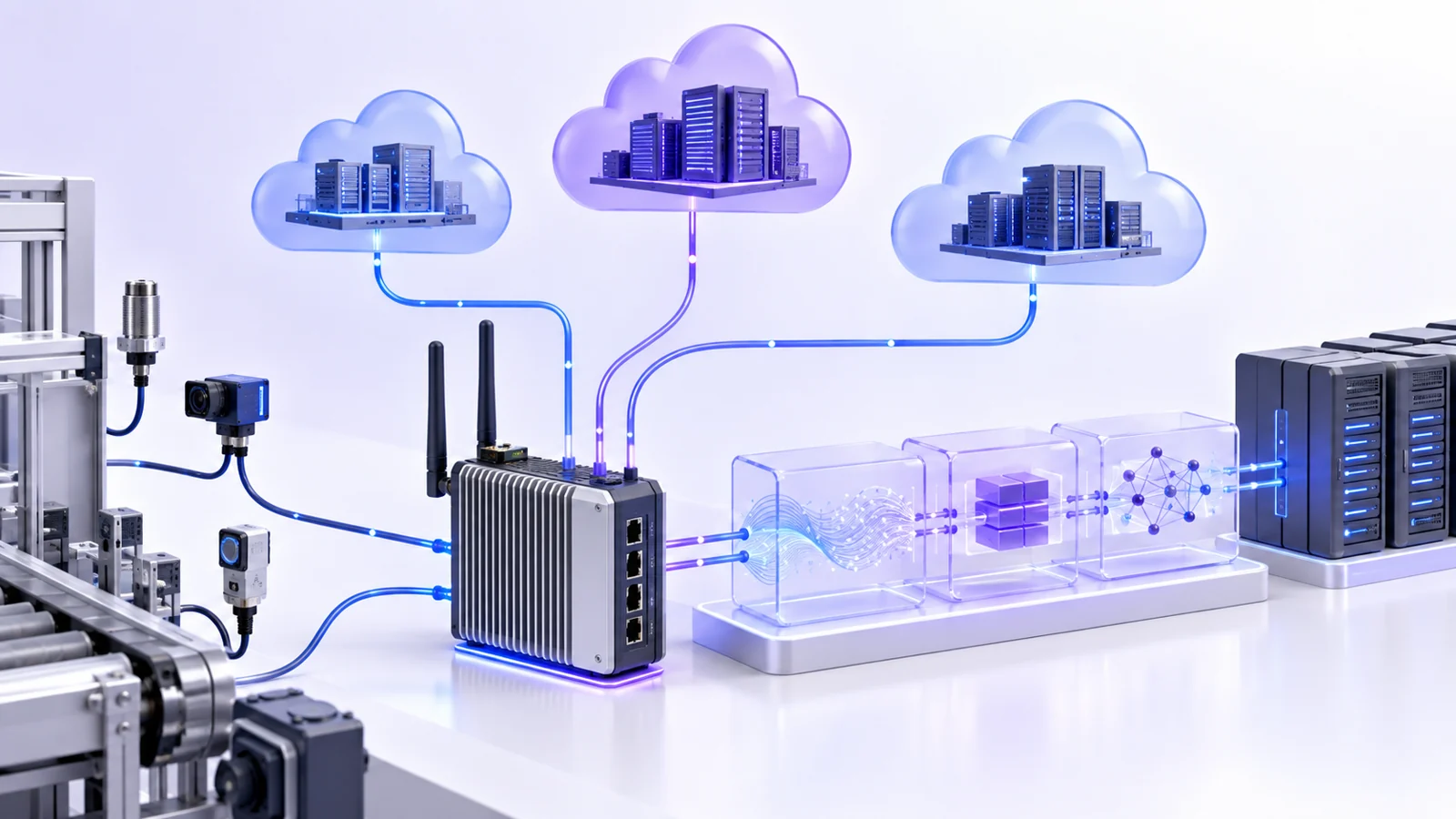
Device-to-cloud architecture. Choose the connection and ingestion pattern from fleet size, message behaviour and management needs. Define identities, message structure and the boundary between the device, gateway and cloud application. An MQTT broker, IoT platform or direct ingestion path may suit different projects.
Application services and data. Scope the backend APIs, storage and processing required by the product. Separate raw readings from derived values and define retention and access requirements. Operational dashboards and integrations should be designed around the people who use the information.
Deployment and operations. Agree environments, configuration management, logging, monitoring and recovery expectations. Review cloud cost drivers such as message volume, storage and processing rather than promising fixed savings. Maintenance and response commitments require an explicit service agreement.
Azure-connected equipment. Discuss a device integration using currently supported Azure services where these fit the client environment.
Google Cloud or AWS projects. Evaluate supported ingestion and application architectures. Select the message ingestion, data storage and application interfaces from the supported services on the chosen platform.
A handover includes architecture diagrams, infrastructure configuration, API and data definitions, deployment instructions and test evidence. Identify who owns the cloud account, access controls and recurring costs.
Provide device counts, expected data volumes, latency needs, geographic requirements and the existing cloud environment. Include sample messages, security requirements and recovery expectations. These inputs make platform selection and a realistic operating model possible.
Test duplicate messages, delayed delivery and a device reconnecting after an outage. Define the ownership of logs, monitoring and recurring cloud costs before the deployment is handed over.