
NexXora’s CNC scope includes programming, modelling, fixtures, process planning and machining across several machine types.
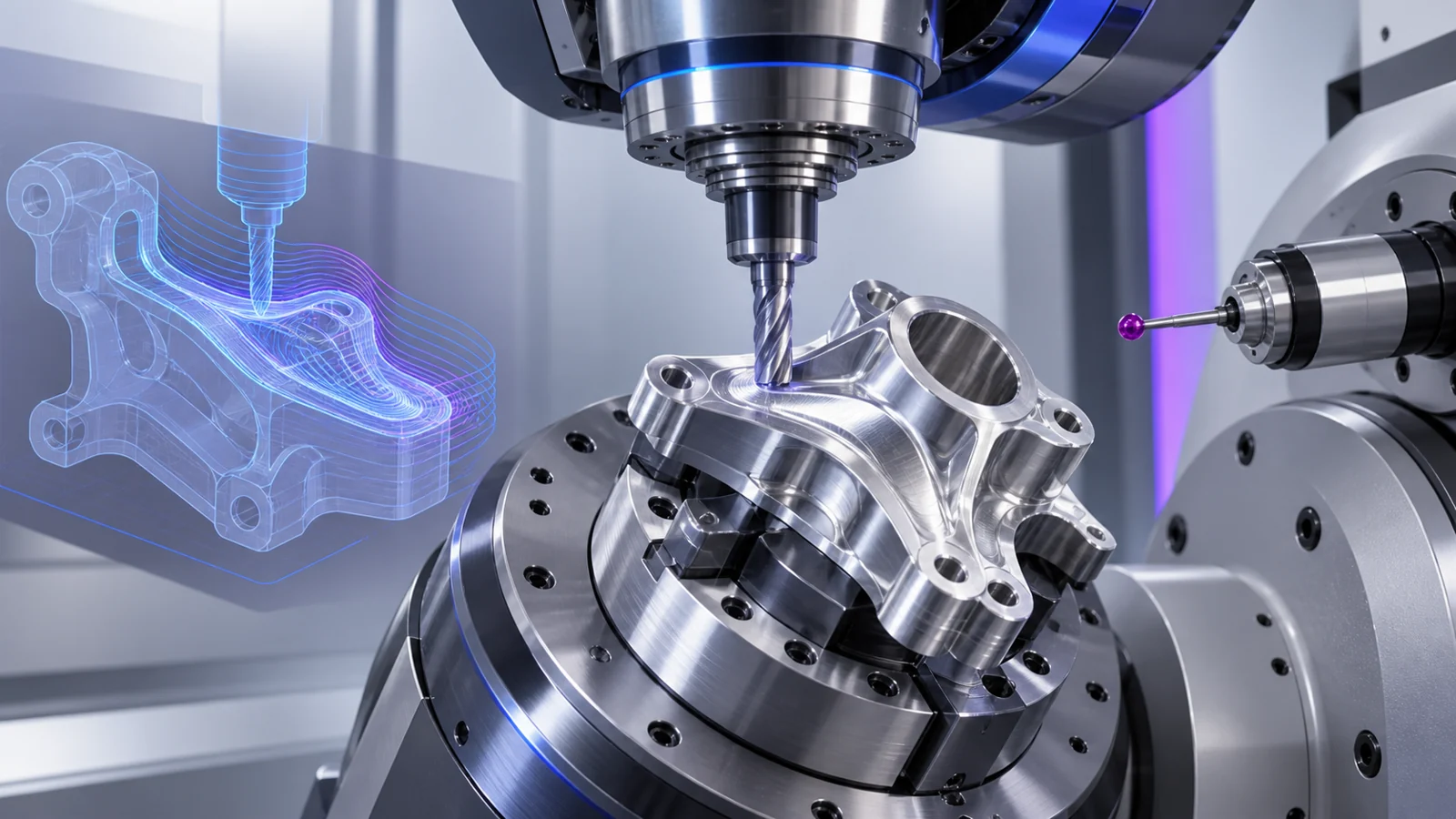
CAD/CAM and programming. Scope toolpaths, setup planning and post-processor output for the agreed machine and control. Discuss turning, milling including 5-axis, turn-mill and Swiss or multi-spindle work against the part and machine requirements. Confirm the exact machine configuration and prove out the programme through the agreed verification process.
Fixtures and process information. Develop fixture concepts, setup sheets, routing information and tooling requirements as needed. For a legacy drawing, scope 2D-to-3D conversion and resolve ambiguous dimensions before programming. Cycle-time studies should identify their assumptions and be checked against the production conditions.
Quality and customer communication. Agree critical dimensions, first-article review, in-process checks and the inspection report required at delivery. Maintain an issue and change record. Give the customer an agreed review cadence and clear escalation when a drawing, material or process question affects the build.
Complex equipment parts. Plan machining for a housing or multi-face component, coordinating tool access, fixtures and inspection requirements.
Connected manufacturing. Scope exchange of released job, routing or inspection data with an ERP or production system, with the integration boundary defined separately.
Deliverables can include proven-out programmes, setup sheets, tool lists, fixture drawings, process routing and inspection records according to scope.
Provide models and drawings, material, quantity, tolerances, machine/control details for programming-only work and required quality records. Agree the manufacturing location, inspection equipment, acceptance responsibilities and dimensional requirements when defining the project scope.
Use a first-off review to compare the setup, programme and measured part. Resolve deviations through a released drawing or process change, and retain the inspection evidence with the released revision. Agree the review milestone, the responsible approver and the evidence needed to close open issues. Record changes against the agreed requirements so the handover remains useful for the next engineering or manufacturing stage.