
NexXora incorporates Design for Manufacturing, or DFM, into mechanical design. The scope includes CAD modelling, finite element analysis and manufacturability review. DFM connects the intended function of a part to the process used to make it, helping the engineering and manufacturing teams work from compatible assumptions.
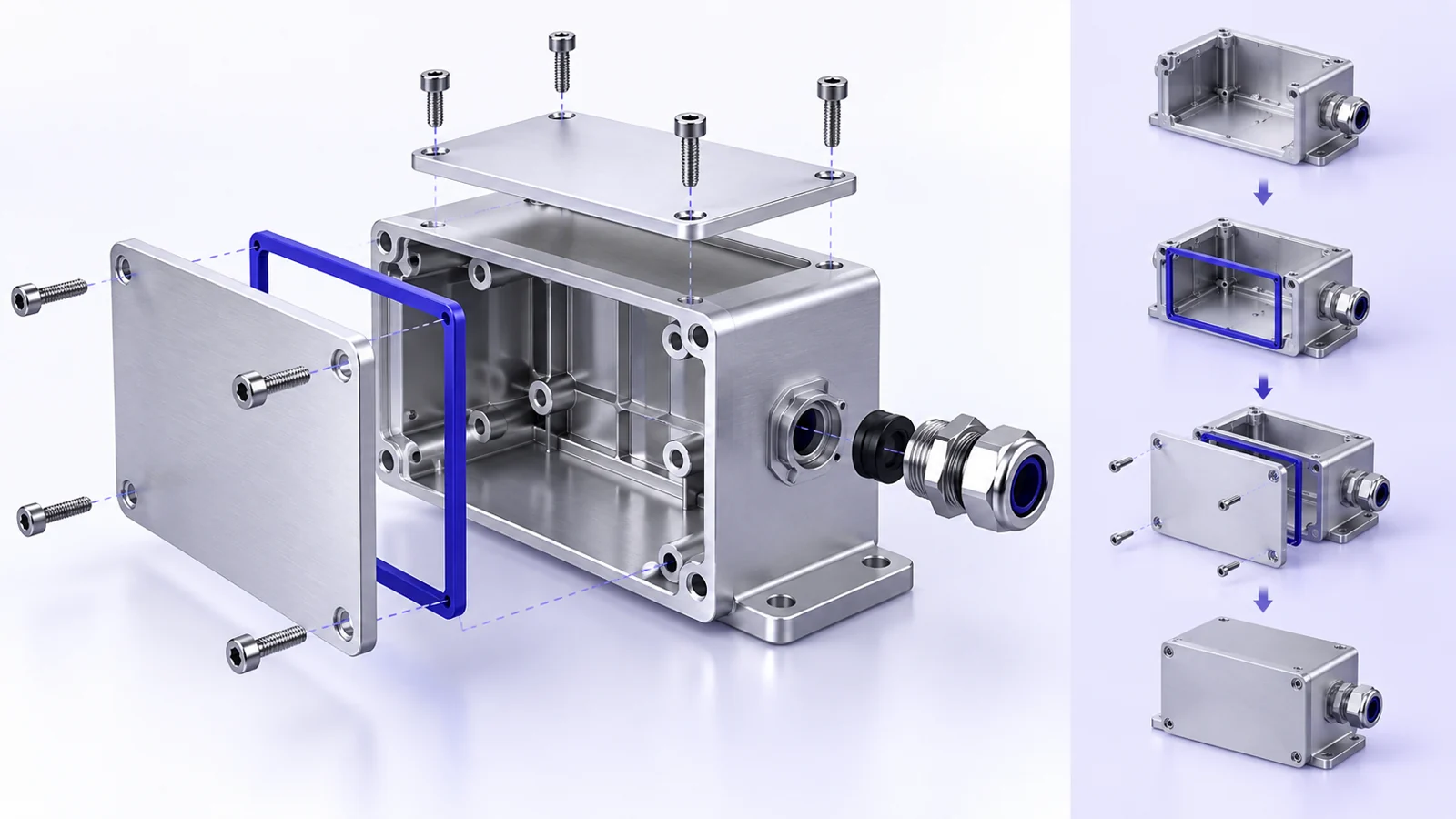
Process-aware geometry. Review the part against the selected process, such as CNC machining, a confirmed printing process or a separately scoped production method. Consider tool access, unsupported features, wall transitions and achievable surfaces. Each process gets its own design rules; what suits a machined pocket rarely suits a printed wall.
Assembly and service review. Examine fasteners, component access, mating features and the order of assembly. Identify where a tolerance stack or difficult-to-reach connection could create build problems. Where serviceability matters, consider how a component can be replaced without damaging the surrounding assembly.
Release and supplier coordination. Turn review findings into clear design changes and record the revision that contains them. Discuss critical dimensions, material availability and inspection needs with the manufacturing team before release. Supplier feedback should be traceable to a drawing or model feature.
Machined housings. Revise pocket geometry, interfaces and tolerances so the enclosure suits the intended tool access and assembly sequence.
Prototype-to-production transition. Review a printed development part before adopting a different production process, identifying changes that the original prototype method did not require.
The handover includes a DFM findings register, updated models and drawings, an assembly review and manufacturing assumptions. Where analysis supports a change, include the relevant report. Agree which findings must be closed before a prototype or production release and which are accepted trade-offs.
Share the current CAD model, functional requirements, target material, intended manufacturing process, expected volume and critical interfaces. Include assembly instructions or known production defects when available. A focused DFM review should prioritize the features that affect fit, function, inspection and repeatable manufacture.