
NexXora’s CAD and CAE service combines 2D and 3D modelling with simulation to examine strength, durability and manufacturability. A useful engagement starts with the decision the model or analysis needs to support, rather than producing geometry without an engineering purpose.
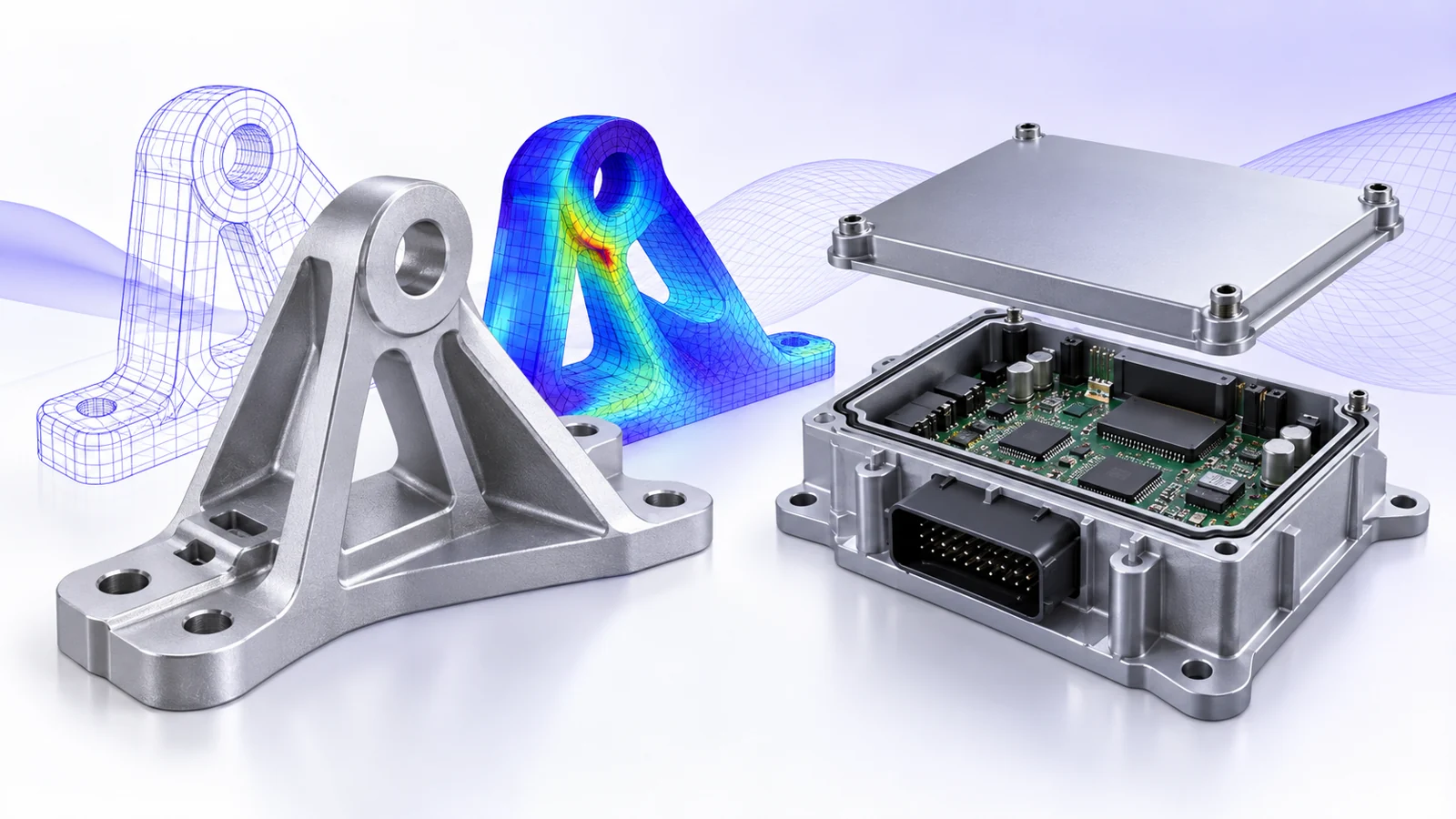
Part and assembly modelling. Develop component models, mating relationships and assembly layouts from requirements, sketches or existing drawings. For legacy equipment, scope 2D-to-3D conversion separately from redesign. Establish the reference dimensions and interface information needed to avoid carrying old ambiguities into a new model.
Engineering drawings. Prepare views and dimensions that communicate manufacturing and inspection intent. Identify critical interfaces, fits and tolerances with the customer. Drawing release should be tied to the model revision so manufacturing and inspection teams are working from consistent information.
Simulation and design review. Scope structural, thermal or vibration analysis around the specific design decision and available inputs. Record material properties, constraints and loads. Use the results to compare design choices and to identify the questions physical testing must answer.
Equipment structures. Evaluate a bracket or enclosure under defined loads and revise the geometry before manufacturing a prototype.
Electronic products. Coordinate the mechanical assembly with PCB, connector and thermal constraints, including access for assembly, testing and service.
Agree the native CAD files, exchange formats, drawings, assembly structure and analysis report. Reports should include assumptions and interpretation, not just coloured contour plots. If you need a design suitable for manufacture, connect the modelling work to DFM and the selected build process.
Provide the design brief, reference geometry, materials, expected loads, temperature conditions and mating-part information. Identify the CAD platform and file formats required at handover. Missing loads or uncertain materials should be resolved before relying on a simulation to make a production decision.