
Industrial equipment projects often combine physical machinery, control electronics and operational software. The engineering task may be a new controller, a monitoring retrofit or an application that makes production information usable. Define the machine boundary and the decision the system needs to support.
Integrate available machine or sensor signals through a gateway and present relevant operating trends. Define timestamps, units and missing-data behaviour. Use the resulting information for a scoped maintenance or operational workflow without assuming predictive capability from basic telemetry.
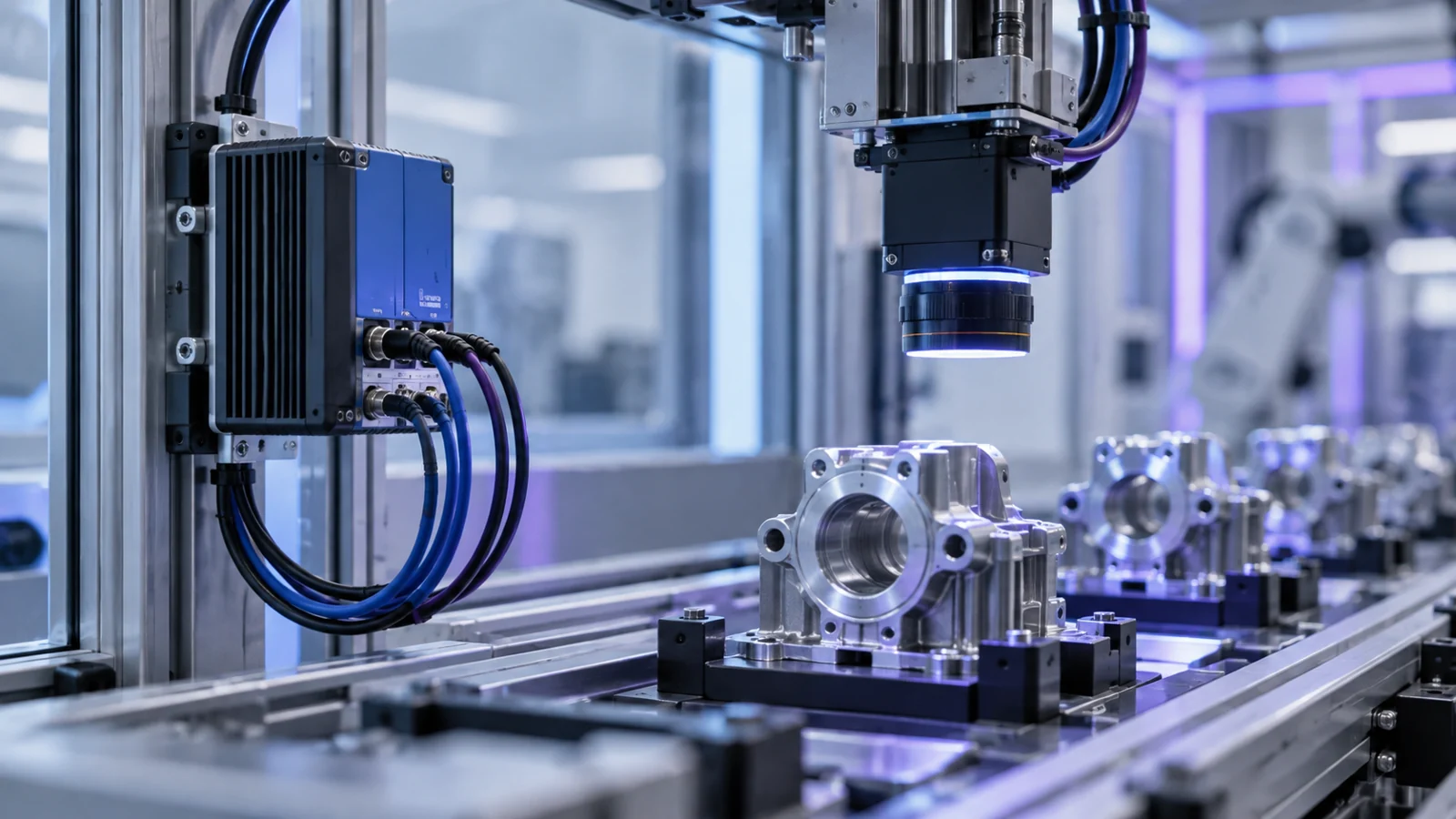
Evaluate camera and lighting arrangements for checking part presence, surface defects or assembly features. Agree representative samples and acceptable false-reject and missed-defect behaviour. Keep any machine-stop or safety function within the customer’s separately defined control architecture.
Connect CAD/CAM, fixture design and CNC work to the manufacturing requirement. Integrations can move released routing, BOM or inspection information into the customer’s production systems, with revision control and exception handling.
A work package can include device interfaces, a monitoring or inspection prototype, mechanical design files and test evidence. For manufactured parts, agree the inspection plan and records. Identify the operator, maintenance and IT responsibilities before deployment.
Provide machine details, available interfaces, example production data and the specific problem. Include access restrictions, line speeds and the change window available for a trial.