
Computer vision converts images into information a machine or operator can use. The work connects camera and lighting integration, data preparation, model development and application testing. The acceptance criteria must match the real operating environment and the consequence of a wrong result. The vision work here is scoped to inspection, measurement and perception for engineered products and industrial processes. Broader enterprise software, cloud transformation and business IT services belong to NexXora’s parent-company offering.
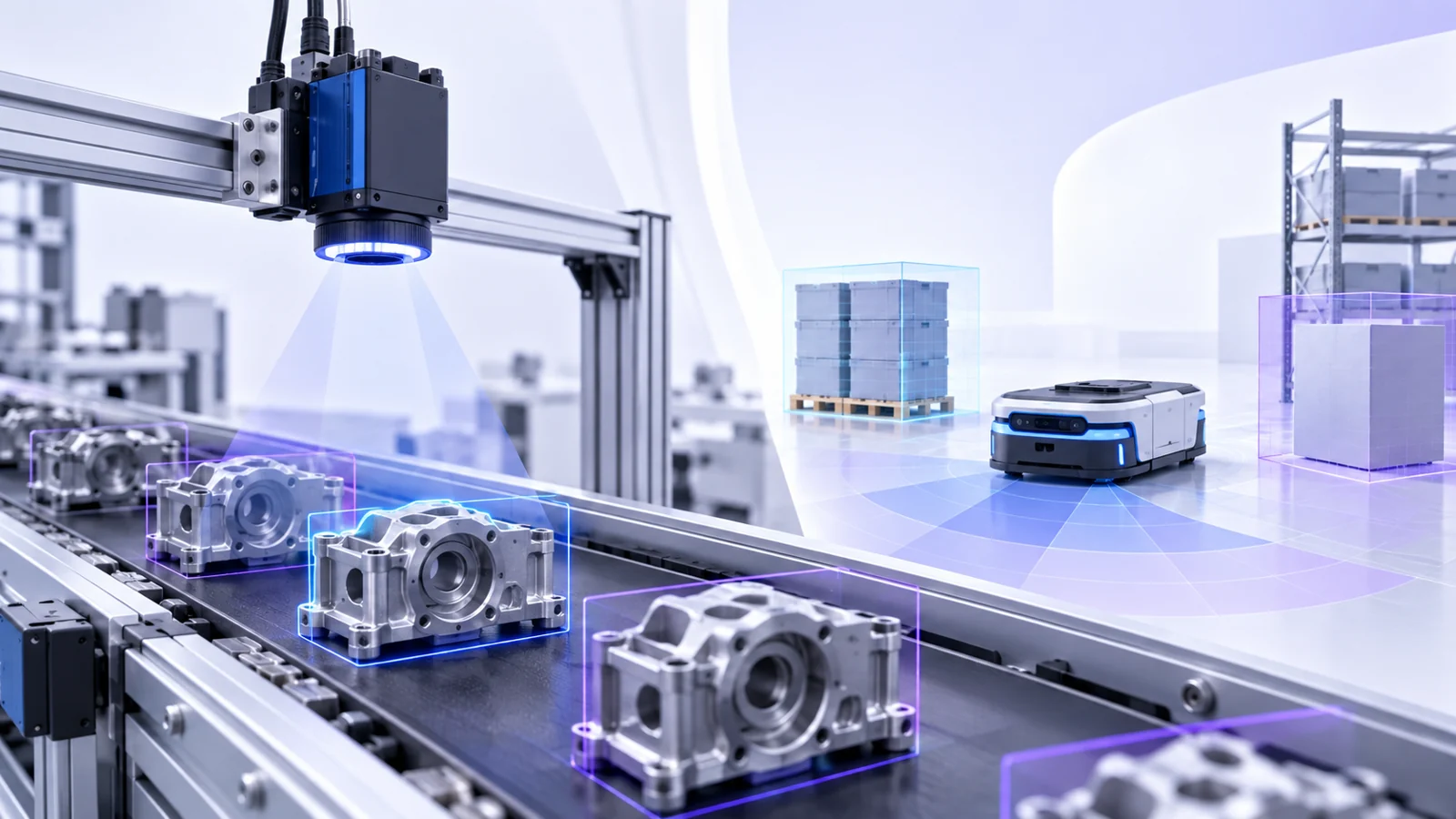
Visual quality inspection. Tasks include detecting surface defects, checking assembly presence and verifying packaging features. Start with defect definitions, camera views and representative good and bad samples. Evaluate false accepts and false rejects separately so the customer can judge the operational trade-off.
OCR and visual measurement. Read printed codes and labels on parts and packaging, and check geometry where imaging conditions allow. Agree how uncertain readings are handled and when an operator must review an item. Dimensional measurement requires calibration and a defined accuracy study, not just an object-detection model.
Perception and deployment. Develop obstacle or object perception for a scoped industrial or mobility application. Connect the model to camera capture, processing hardware and the consuming application. Edge deployment needs latency, memory, temperature and power testing on the actual target.
Food and beverage packaging. Evaluate label, code and packaging-feature inspection as a production-support application, without implying regulatory validation or automatic product release.
Automotive and warehouses. Scope perception development and evaluation for automotive perception systems or mobile warehouse equipment. A detected obstacle is only one component of an independently validated motion or safety system.
The handover includes a labelled-data specification, model and software artifacts, integration notes and evaluation results by relevant operating condition. Define the representative dataset and acceptance thresholds with the client. Document failure cases and a process for evaluating changes to cameras, products or environments.
Share sample images or video, defect classes, operating speeds, lighting variation and target hardware. Identify the action taken from each result and the cost of missed or false detections.