
NexXora designs compact, high-density PCBs for products where the electronics must fit within a limited space. Applications include wearables and IoT hardware. Miniaturization is a coordinated design task: board area, component packaging, battery space, connectors and assembly access all interact.
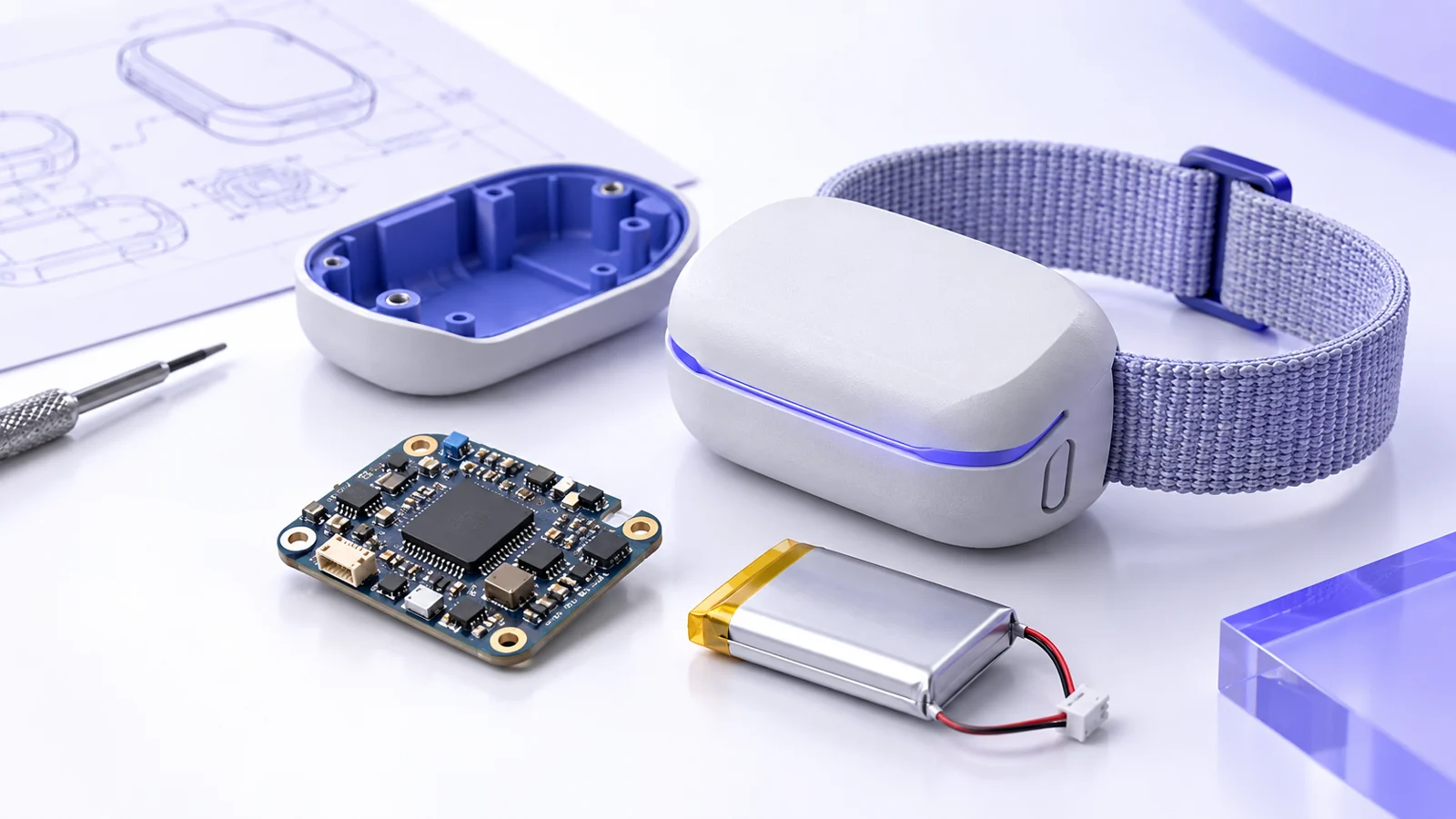
Board and enclosure co-design. Start from the available mechanical envelope, mounting points and user interfaces. Coordinate connector access, sensor openings and battery placement with the mechanical team. A smaller board only helps if the complete product can still be assembled and serviced as required.
Density and component placement. Review package choices, placement priorities and routing feasibility. Consider the fabricator’s constraints and the assembly process before adopting finer features. Technologies such as rigid-flex or specialized interconnect structures must be explicitly confirmed for the project.
Power and thermal constraints. Map power consumption and heat sources within the available volume. For a battery-powered product, coordinate firmware power states and hardware choices. Define the operating environment so thermal assumptions and enclosure decisions can be evaluated together.
Wearable sensing. Package sensing, wireless connectivity and processing in a constrained wearable form while maintaining the required signal paths and access for charging or testing.
Compact IoT nodes. Develop a small sensor or monitoring unit whose enclosure, antenna and power source impose competing physical constraints.
Agree the board outline, placement review, PCB design files, mechanical exchange files, assembly notes and prototype evaluation scope. The release should state any fabrication or assembly assumptions that affect cost or yield. A prototype build is useful for checking fit and access before committing to production tooling.
Provide the product envelope, target battery or power source, interfaces, mounting scheme and environmental requirements. Include size priorities and expected manufacturing volume. Avoid specifying an arbitrary minimum board size until the circuit and production constraints have been reviewed.