
PolyJet builds parts by jetting photopolymer material and curing it with ultraviolet light. It is a material-jetting process, distinct from Multi Jet Fusion. Fine-detail and multi-material prototypes help evaluate appearance, fit and interaction before committing to production tooling.
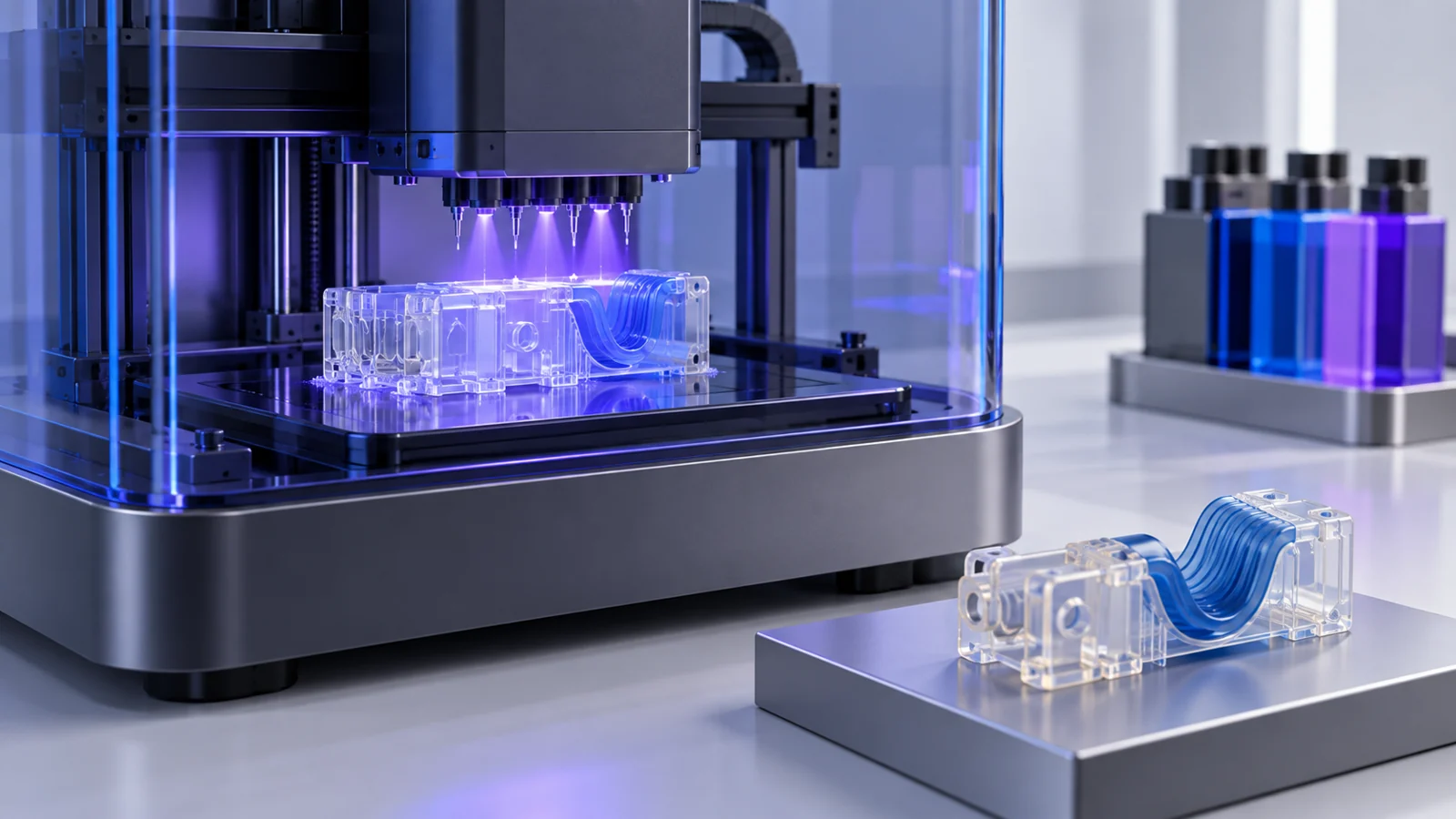
Appearance and design models. Create a prototype to examine shape, surface details and the relationship between components. Where supported materials allow it, combine visual characteristics in one model. Available colour and material combinations depend on the system and material set, and are confirmed for each build.
Fit and tactile evaluation. Work includes enclosure, grip or interface models used to evaluate a product before tooling. A flexible-looking or transparent prototype material may imitate a design feature without matching the long-term behaviour of the eventual production material.
Build preparation and finishing. Review fine features, support access and the orientation needed for the model. Agree support removal and other finishing requirements. Photopolymer durability, light exposure and temperature behaviour should be checked against the intended use and material data.
Consumer electronics. Review an enclosure concept, transparent feature or user-contact surface before committing to production tooling.
Industrial machinery and equipment. Review a handheld controller, panel interface or guard component for grip, control placement and surface finish before tooling. A prototype appearance does not establish durability under repeated handling, chemical exposure or the behaviour of the production material.
Agree the CAD revision, materials, colour or transparency requirements, finishing and dimensional inspection. If the prototype is intended for a functional test, identify the properties that need verification. Record the limits of the model so it is not later mistaken for a qualified production component.
Provide the model, key dimensions, intended review or test, and desired material appearance. Confirm whether the part needs only visual realism or a measured physical property. Review available material combinations, build size and finishing options against the intended prototype evaluation.