
Multi Jet Fusion is a powder-based additive process. It supports functional parts, prototypes and selected end-use applications, subject to the chosen material and design requirements.
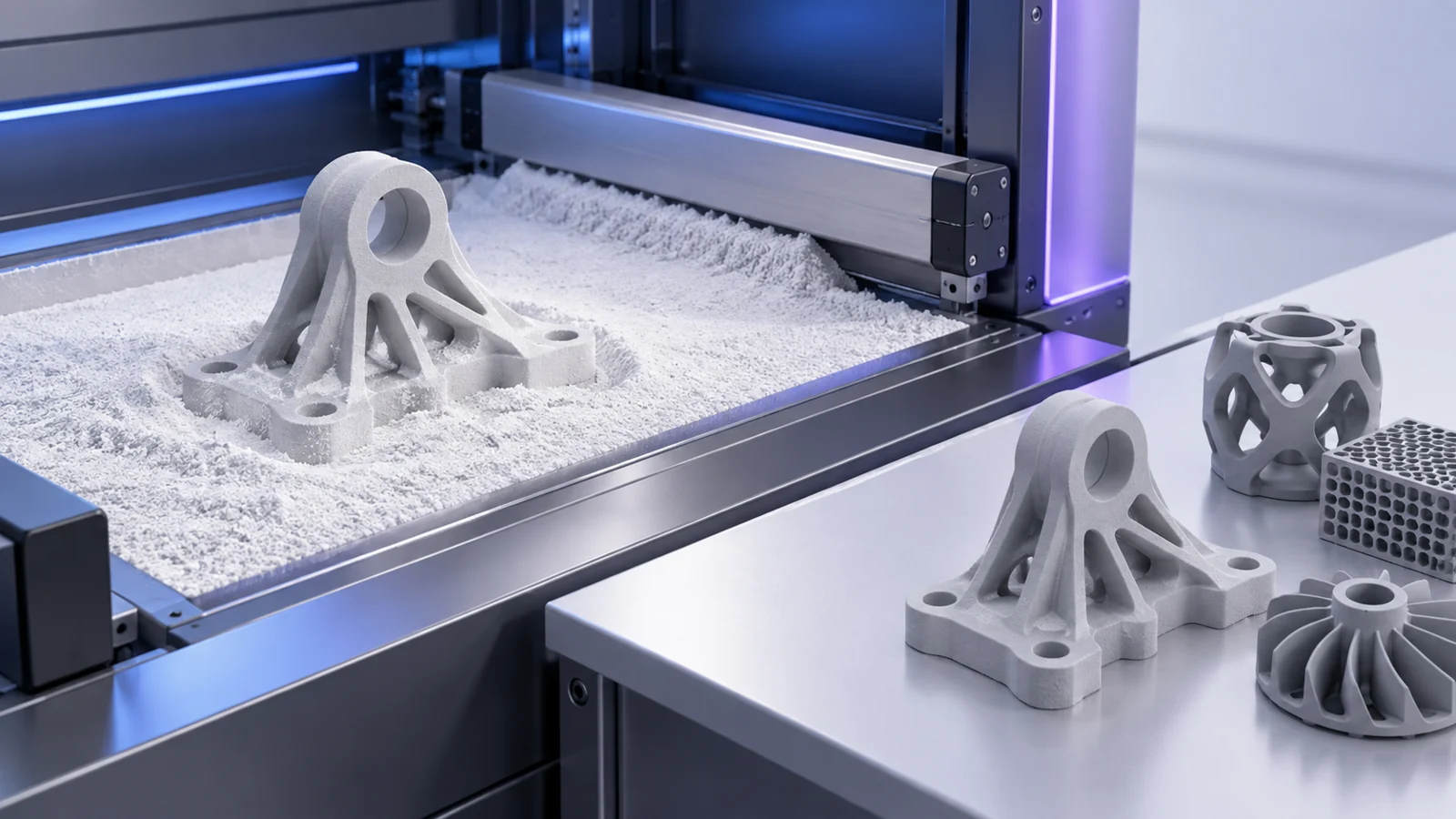
Functional polymer prototypes. Build parts intended to evaluate fit, assembly and selected mechanical behaviour. Confirm the polymer grade and relevant material properties with the supplier. Compare the prototype with the real use conditions rather than assuming all powder-printed parts behave in the same way.
Batch and end-use applications. Scope small batches or end-use parts when the geometry, material and qualification requirements fit the process. Review thin features, enclosed volumes and powder-removal access before a build. Production acceptance remains tied to the customer’s requirements and evidence.
Post-processing and inspection. Agree depowdering, surface finishing, colouring and dimensional checks as required. Parts may need additional work after printing. Record which features are critical and which cosmetic variations are acceptable so the build can be evaluated consistently.
Industrial equipment. Evaluate brackets, housings or duct-like components where a functional polymer prototype can support an engineering trial.
Automotive development. Produce a scoped prototype or tooling aid for fit and functional evaluation, without implying that the part is qualified for a safety-critical vehicle application.
The build handover should identify the model revision, material, quantity, finishing and inspection results. If material traceability or a specific qualification test is required, agree it before the order. A process-level comparison with moulding is useful for selection, but the final acceptance must use the actual part and material data.
Share the CAD model, drawing, intended loads and temperatures, quantity and critical dimensions. Confirm current materials, build envelope and supply route. Agree the dimensional requirements, inspection method and delivery scope for the selected material and build process.
Identify critical dimensions and functional surfaces before nesting the build. Agree cleaning, finishing and inspection requirements so the delivered part is assessed against its intended use.