
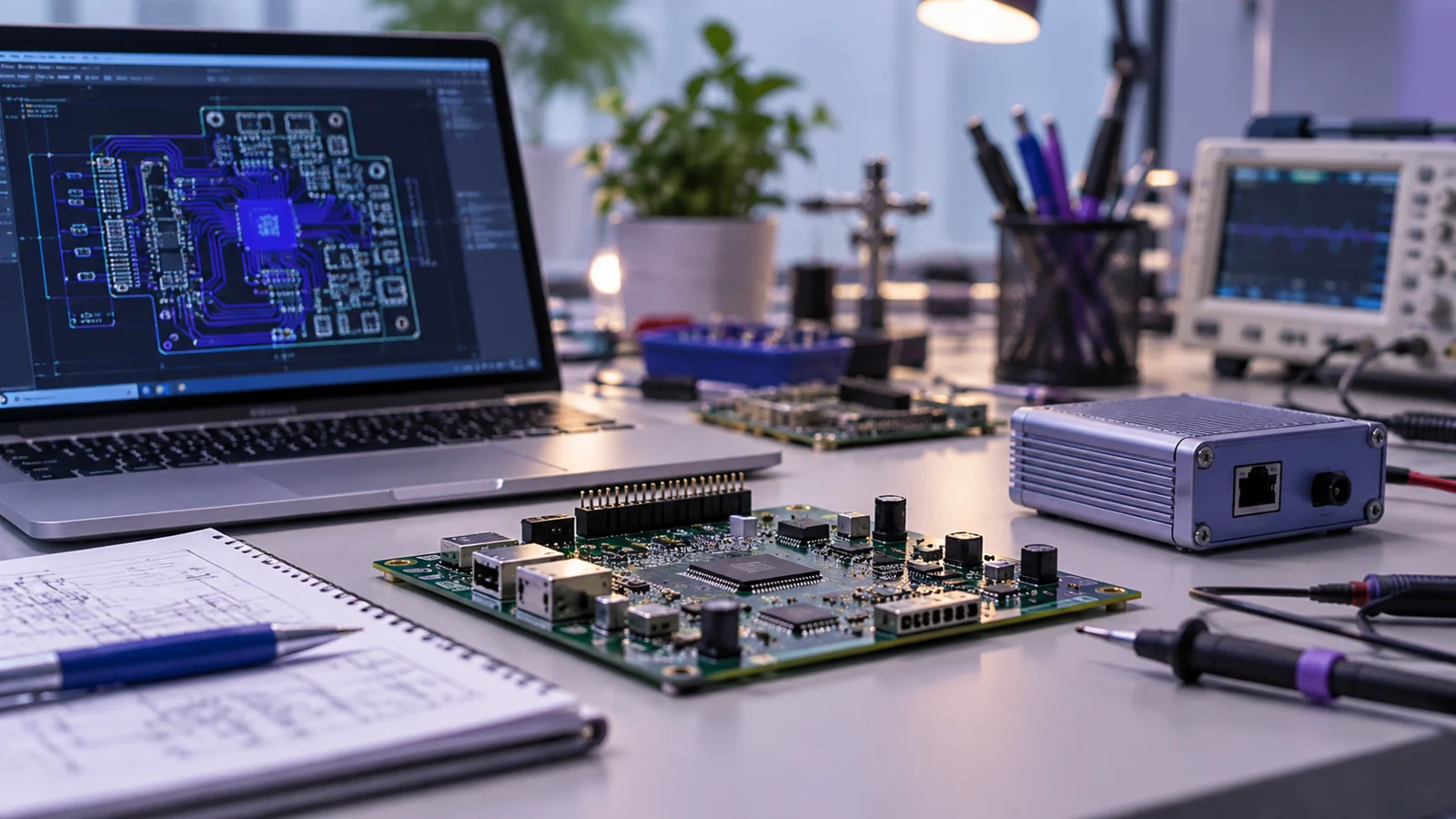
A hardware-development project needs more than a circuit diagram. The electronics must fit the product, operate within its power and environmental limits, and arrive at manufacturing with clear design information. When selecting hardware engineering support in Chennai or working with a distributed team, the most useful starting point is a well-defined engineering brief.
Describe what the product must sense, process, communicate or control. Include the operating environment, available power, physical envelope and required interfaces. A requirement such as “small and low power” becomes useful when it is connected to dimensions, an operating pattern and a measurable target.
The architecture identifies the processing, sensing, communications and power blocks. Review component availability, interfaces and mechanical constraints before committing to a detailed board. Decisions at this stage affect firmware, enclosure design and the eventual assembly process.
Schematic capture and PCB layout should reflect the intended signal paths, return paths and manufacturing constraints. RF, high-speed, analog and miniature designs introduce different questions. Use specialist analysis where it supports a specific risk, and record the assumptions that need checking on a prototype.
A prototype is useful when it answers a question. Define bring-up checks, interface tests and performance measurements before the board arrives. Record the hardware and software revision used for each result. A board that powers on has passed one check, not every requirement of the product.
Discuss schematics, PCB files, the bill of materials, manufacturing outputs and test information at the beginning. Clarify source ownership, third-party dependencies and support after delivery in the engagement terms. A clear handover helps the next team build, test and maintain the product.
Bring a product brief, available drawings or code, known constraints and the stage you have reached. Explain which decisions are already fixed and which need engineering work. NexXora’s hardware, embedded and mechanical service pages provide starting points for that discussion.